Image: Foto: Wikimedia Commons · License: cc-by-sa
Discreet engineering innovations reduce the cost of light rail and stitch it into the city
Discreet engineering innovations reduce the cost of light rail and stitch it into the city
Main source: VLT da Baixada Santista - SYSTRA Brasil, [Dossier Mobilités] #13 - Le tramway : un outil d’aménagement urbain bas carbone, Press Releases - Metro Transit · By The Rail Post Desk
Techniques such as the ‘rail bas’, fixed catenary to the track, and streamlined signaling are making light rail a cheaper and more adaptable option to the urban fabric, with Baixada Santista as an advanced laboratory.
Modernity is not abstract. It has ballast, gauge, energy, and direction.
Light rail vehicles (LRV) are being rehabilitated as a central technology for urban development in dozens of cities. However, what is really turning the economic tide is not the vehicle itself. It is the discreet civil engineering and fixed systems innovations that are driving down implementation costs and allowing the mode to infiltrate consolidated urban grids without traumatic demolitions.
The French experience compiled by the Construction21 technical dossier reveals an elementary principle that has escaped many administrations: the depth of the permanent track superstructure is the first major frontier of savings. Classic rail requires, on average, 60 centimeters of excavation to lay the platform, which invariably forces the diversion of underground water, sewage, gas, and telecommunications networks.
The ‘rail bas’, in turn, demands only 42 centimeters of depth. This difference may seem modest on an engineer’s ruler, but it eliminates kilometers of utility diversion works. The 18-centimeter reduction in the vertical track clearance means fewer indemnifications, less time, and fewer disruptions for the surrounding population.
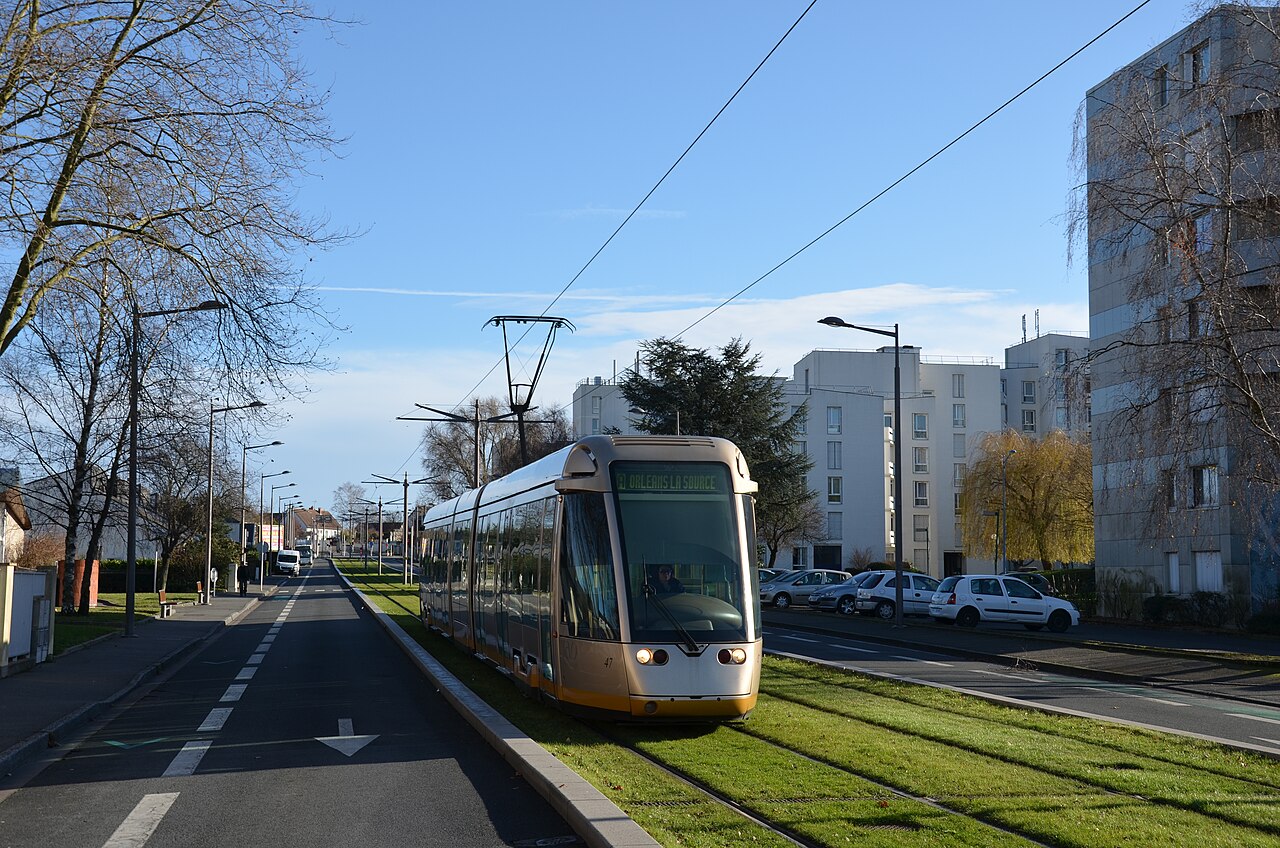
The second silent innovation is in the overhead catenary. The traditional model of gantries and poles required massive concrete blocks buried at each fixing point, a heavy operation that multiplied civil works effort. The new approach fixes the gantries directly to the track structure, suppressing the massive blocks and drastically reducing the volume of concrete and subsoil disturbance.
In the same logic of rationalization, the multi-tube technique replaces conventional technical galleries with a pair of conduits embedded in the very concrete that defines the obstacle limitation gauge (GLO), on each side of the platform. Rather than disturbing the urban subsoil with wide trenches for dozens of ducts, energy and telecommunications infrastructure is concentrated in a minimal space perfectly integrated into the track geometry.
The condensed maintenance center is another blow to the inertia of traditional railway megaprojects. The recommended model occupies no more than 20,000 square meters of land, gathering in a single yard the stabling tracks, washing station, sand filling station, and a maintenance building with exactly four specialized tracks. These consist of a track with overhead access, a track over a pit, a track with a lifting system, and a fourth equipped with an underfloor wheel lathe, covering all rolling stock intervention needs without inflating the real estate footprint.
Railway signaling has also been subjected to intelligent streamlining, preserving the safety level without replicating the complexity of heavy metro systems. The system operates in two modes: normal mode covers daily circulation with full safety redundancy, while degraded mode, activated in failure or exceptional shunting situations, replaces costly signaling equipment with operational rules.
This means that return maneuvers for depot access, for example, are carried out through standardized operational procedures, not by a paraphernalia of track circuits and active balises. The result is significant savings in electronic components, cabling, and software, without sacrificing system integrity for the remaining 99 percent of operational time.
Brazil is beginning to translate this technical recipe into concrete reality with the Baixada Santista Integrated Metropolitan System (SIM) project, whose priority Barreiros–Porto section is being detailed by SYSTRA Brazil. The region encompasses nine municipalities and 1.8 million inhabitants, linked by a dynamic that mixes South America’s largest port, the Cubatão petrochemical hub, and intense high-season beach tourism.
The alignment of the priority line uses the bed of the old Samaritá-Porto railway, deactivated decades ago, stitching the insular portion of São Vicente to the port heart of Santos on an exclusive and segregated right-of-way. The track superstructure was designed to be compatible with UIC standard gauge of 1.435 meters and axle loads of 11 to 13 tonnes, making it suitable for rolling stock from any global manufacturer, be it Alstom, Bombardier, CAF, or Stadler.
This technological neutrality is a strategic asset: the functional design sizes terminals, transfer stations, yards, workshops, cycle paths, and bicycle parking with universal parameters, without being hostage to a single train supplier. The modeling also included demand studies, transport network simulation, and bus line reorganization to feed the light rail rather than compete with it.
Electric power will be supplied by an overhead catenary fixed to the track, following the European principle of minimizing concrete masses and civil works effort. Passenger access control and fare collection will be integrated from the first day of operation, avoiding future patch-ups that burden operating costs and degrade the user experience.
The basic design of the Barreiros–Porto section also includes the interference cadastre, road geometry, earthworks, paving, drainage, special engineering structures, public lighting, landscaping, and visual communication. It is a facade-to-facade metamorphosis, as defined by the French school of modern tram implementation, where the track is the pretext to requalify the entire urban environment in its wake.
Preliminary surveys included geotechnical investigations, functional and structural assessment of the existing pavement, as well as the expropriation project and the individual cadastre of properties affected by the alignment. This stage, often neglected in Brazilian projects, is critical to avoid property surprises that usually paralyze works for years on end.
Intermodality is the guiding thread of the project: the cycle path and bicycle parking are organic components of the design, not decorative appendages, ensuring that passengers arrive by bicycle, park safely, and board the light rail without friction. The road system in the project’s area of influence is also being redesigned to give priority to public transport on rails at signalized intersections.
What the Baixada Santista experience demonstrates, in practice, is that light rail has ceased to be a luxury of wealthy European cities to become an economically viable alternative for medium-sized Brazilian metropolitan regions. The key is the systematic adoption of construction techniques that respect the subsoil, simplify the fixing of the overhead network, and streamline signaling, all without compromising operational safety.
The rail, after all, does not need to arrive with war tractors and billion-dollar budgets. It can simply insinuate itself through the city with 42 centimeters of depth, two conduits embedded in the concrete of the GLO, and a 20,000-square-meter maintenance center, functioning with the precision of a lean and resilient nervous system.