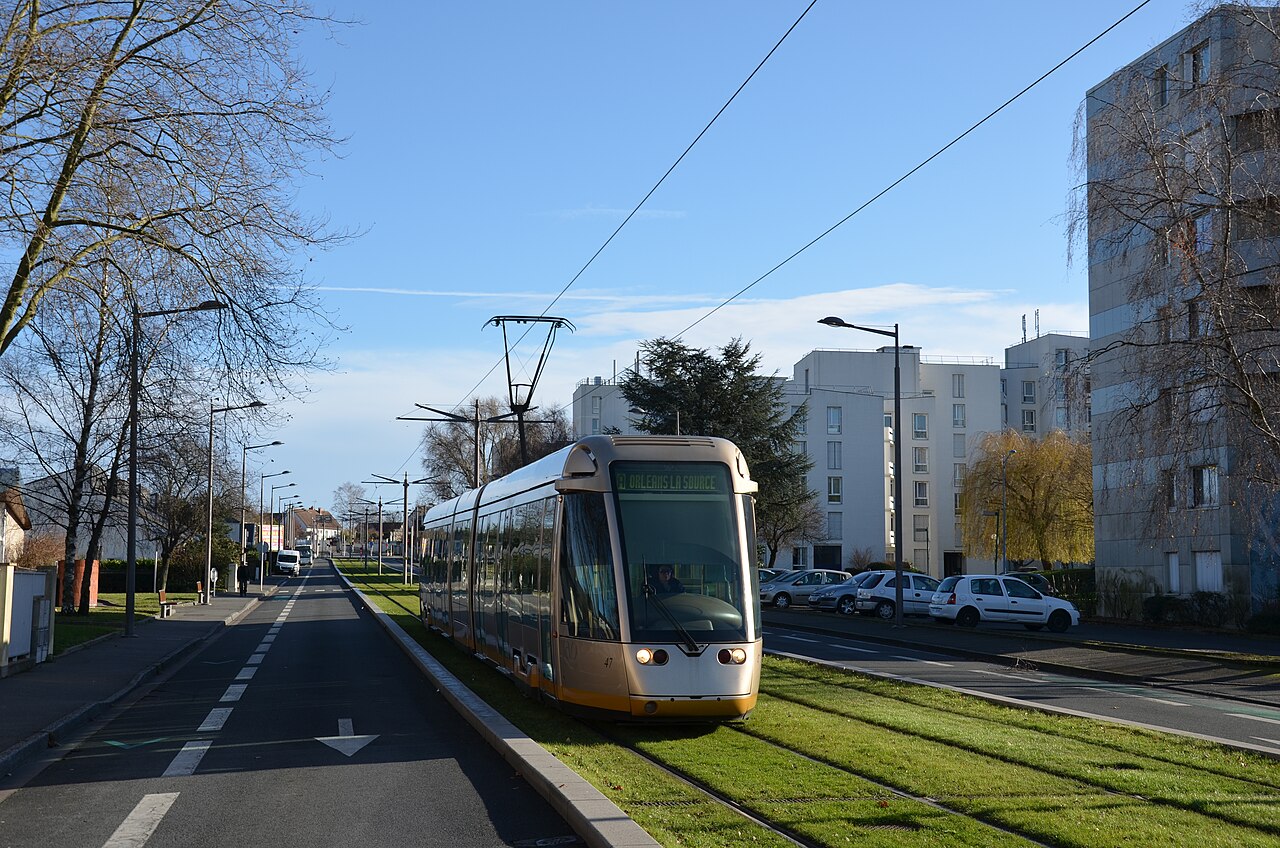
Image: Foto: Wikimedia Commons · License: cc-by-sa
Second wave of Light Rail Vehicles advances strongly in Brazil and injects R$ 10 billion into electric mobility
Second wave of Light Rail Vehicles advances strongly in Brazil and injects R$ 10 billion into electric mobility
Main source: VLT avança nas capitais - ANPTrilhos, Conheça 9 projetos de VLT no Brasil -, Notícias - Mobilize Brasil · By The Rail Post Desk
Signed contracts, hoardings on the ground and underground electric power supply replace shelved projects. The new generation of Light Rail Vehicles arrives to reorder the asphalt of capitals like Rio, São Paulo and Salvador, proving that medium-capacity rails are the shortest shortcut between road chaos and the right to urban time.
When technique organizes space, society gains time to live. The maxim materializes in concrete, steel and carbon fiber in the second wave of Light Rail Vehicles (LRVs) that advances over Brazilian capitals, repositioning the mode as the backbone of medium-capacity mobility.
Far from the nostalgia of trams, this new generation of projects arrives supported by Public-Private Partnership (PPP) models, federal injection from the PAC (Growth Acceleration Program) and an urban urgency that no longer accommodates saturated bus corridors. The spearhead of this movement is planted in Rio de Janeiro.
The Gentileza Intermodal Terminal (TIG), in São Cristóvão, is the physical translation of this new urban engineering. The infrastructure, which consumes a total investment of R$ 2 billion in the corridor — of which R$ 532 million are federal funds —, integrated lines 1 and 4 of the Carioca LRV with the Transbrasil BRT and 14 municipal bus lines, processing 130,000 passengers daily.
The intermodal gear allows a passenger coming from Penha to disembark from the BRT, walk a few meters on the ground floor and board a low-floor train bound for Praça XV, paying a single fare. As detailed by the National Association of Passenger Rail Transporters, the operation is a milestone because it eliminates the fare and physical friction between systems, transforming downtown Rio into a continuous flow zone.
The architecture of integration repeats itself, with technological variations, in the São Paulo capital. São Paulo unlocked a Procedure of Expression of Interest (PMI) and already has R$ 1.4 billion from the PAC to implement 12 km of rails divided into two lines in the historic center, connecting the region to Bom Retiro.
The São Paulo project abandons the visible overhead catenary and adopts the underground electric power supply system (APS), similar to Rio’s, in which a segmented third rail is embedded in the segregated channel to preserve the listed landscape of the center.
The forecast for completion in 2027 embeds a technical optimism that depends on the speed of the bidding modeling. While the São Paulo capital designs its first rails, the Baixada Santista already operates the second continuous expansion of its network, powered by overhead catenary and inserted in dedicated channels in the port region.
Phase 2 of the Santos LRV, with 8 km and 12 stations connecting the Barreiros-Porto branch to Valongo, is scheduled for delivery in July 2024, while Phase 3 enters construction with 7.5 km and four stations towards the mainland area of São Vicente, at a cost of R$ 562 million.
In the Northeast, the volume of resources jumps to another scale. Salvador published the bidding for its LRV with a budget of almost R$ 4 billion, providing for three stretches totaling 36.36 km in length and direct connection to the metro at Águas Claras and Piatã stations, as pointed out by Mobilize Brasil while following the public notice.
The contracting aims to fill the void left by the deactivation of suburban trains in 2021, which pushed thousands of passengers onto overcrowded buses while the purchase of the 40 CAF cars parked in Várzea Grande, Mato Grosso, was being negotiated.
The rolling stock, acquired in 2012 for R$ 497 million for the frustrated Cuiabá LRV, is now the subject of a financial dispute that illustrates the irrationality of Brazilian planning. The Mato Grosso state government asked for R$ 1.2 billion, Bahia offered R$ 700 million and the Federal Court of Accounts mediated a proposal of R$ 900 million, while the trains remain stored in the open for over a decade.
While the accounting impasse drags on, Fortaleza is already reaping concrete results with its diesel LRV, inaugurating in May 2025 the 2.4 km branch that connects Fortaleza Airport to the Castelão neighborhood, integrating tourists and residents to the air terminal.
Curitiba, in turn, embraces the LRV to rewrite the public transport narrative that made it famous. The feasibility study funded by BNDES foresees replacing the Boqueirão Axis BRT with a 10.6 km line with 27 stops and four terminals, extending to Afonso Pena International Airport, at an estimated investment of R$ 2.5 billion.
The replacement of rubber tires with steel on rails in the most iconic structural corridor of Curitiba’s urbanism represents a doctrinal turn: the city that exported the BRT concept to the world now recognizes in the Light Rail Vehicle a load capacity and energy efficiency that the bus, even bi-articulated and in the best-designed channel, cannot deliver.
The technical sheet of this repositioning is indisputable: an electric LRV has a useful life three times longer than a bus, zero local emissions and a drastically lower maintenance cost, because the absence of fuel combustion eliminates moving parts and reduces fatigue of the motor assembly. Platform doors, full fare integration and low floor embed accessibility into the city routine without improvisation, bringing to the outskirts the same predictability of travel that heavy rails offer to expanded centers.
By injecting more than R$ 10 billion into contracts, bids and works ranging from Santos to Salvador, Brazil rediscovers that medium-capacity transport is not a European luxury, but a requirement of urban sovereignty.