Image: Foto: Wikimedia Commons · License: cc-by-sa
The American rail paradox: billions, bureaucracy, and the utopia of 355 km/h in the land of the automobile
The American rail paradox: billions, bureaucracy, and the utopia of 355 km/h in the land of the automobile
Main source: Pros & Cons of Developing US High-Speed Rail, Can high-speed rail finally become a reality in the U.S.? | Trellis, Le train à grande vitesse propulse un nouveau modèle urbain · By The Rail Post Desk
While the world speeds ahead on rails, the United States attempts to tame its own high-speed myth amid lawsuits, budget blowouts, and a car culture that still sees the train as a distant promise.
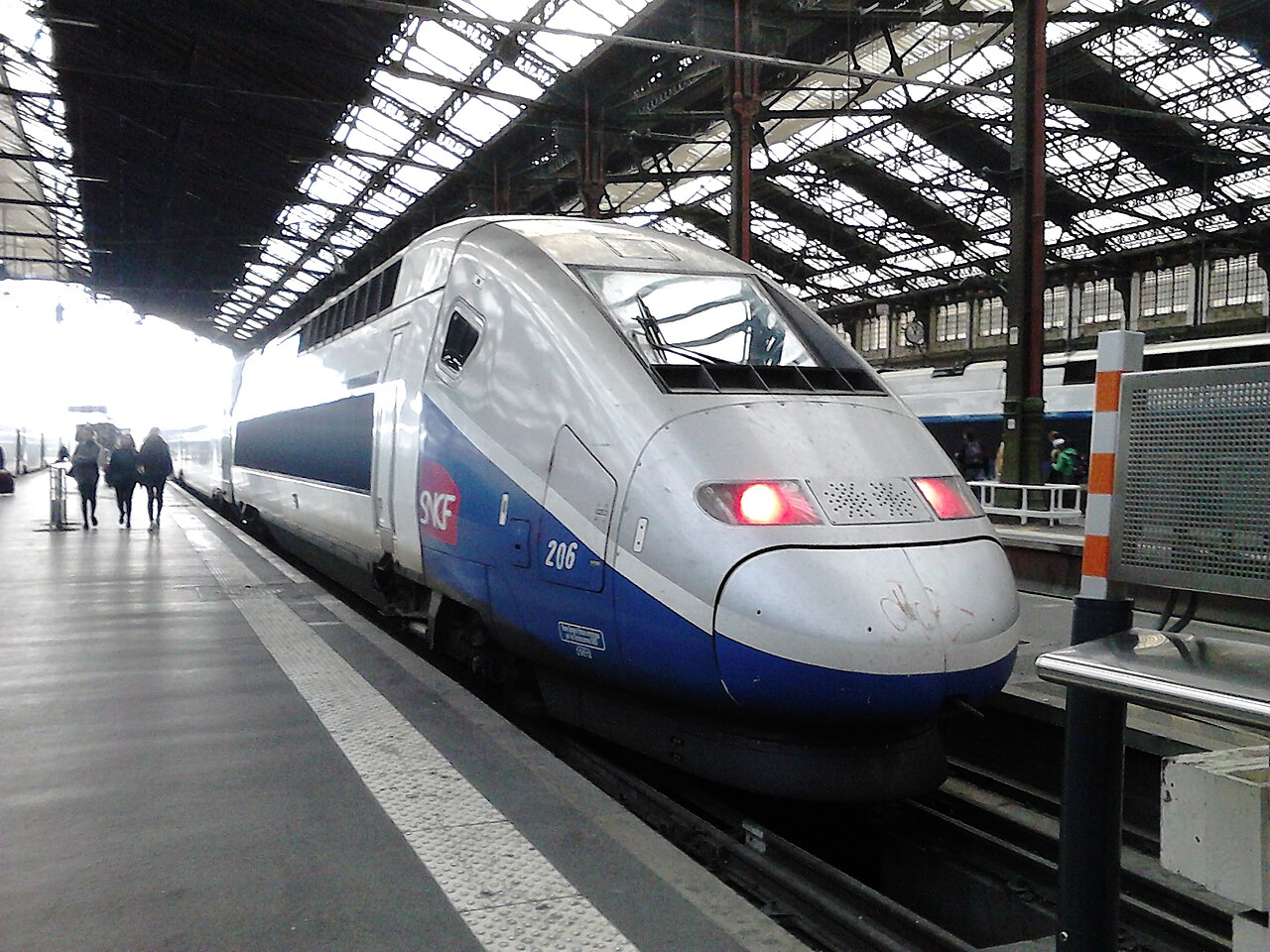
The arrival of the Japanese Shinkansen at 200 mph (322 km/h) in the 1960s redefined the concept of proximity between metropolises. The French TGV followed the same path, achieving similar prestige and performance. Yet Amtrak’s Acela Express, the jewel in the crown of the Northeast Corridor, crawls with its cruising speed limited to 165 mph (266 km/h). The century-old alignment clashes with modern technology, revealing a cruel paradox. The country that invented the culture of mass mobility in the 20th century is now playing catch-up. Trains in Vietnam already plan to shorten 120 km to just 23 minutes with new projects at 350 km/h, as highlighted by the expansion of the Hanoi–Quang Ninh line.
Siemens Mobility North America President and CEO Marc Buncher offered a sociological key to reading that exposes the root of the delay. According to him, companies invest in high speed for the environmental impact, but the Los Angeles citizen who owns a car is not thinking about their carbon footprint. This confession, documented in a broad analysis of the direction of American railroads published by the Trellis portal, encapsulates the struggle between the logic of engineering and the ego of the automobile. Rail comfort lies not only in sustainability but in the fluidity of reaching the city center without airport security rituals. A functional privilege that marketing has yet to sell to a nation shaped by six-lane freeways.
In the American West, the California High-Speed Rail Authority bears the burden of being the greatest symbol of this clash. The line that plans to connect San Francisco to Los Angeles in under three hours, crossing 1,236 km with trains at 355 km/h, has seen its budget explode. From an initial appeal of $33 billion in 2008, the current estimate is staggering: $105 billion. The overhead catenary and standard gauge, which should symbolize progress, run into a quagmire of lawsuits. Counties like Madera try to block the work claiming the alignment would slice through fertile fig and nut lands, according to a report by Der Spiegel on the project.
There is a curse of gigantism that haunts Californian planning. Technical boldness clashes with politics and land fragmentation. The project was designed under the logic of Transit-Oriented Development (TOD), a smart urbanism model that seeks to densify cities around stations. However, in the US, it stumbles against the resistance of communities that fear losing their suburban character. Authorities cite Abraham Lincoln building the transcontinental railroad without knowing where the money would come from. Fiscal reality imposes itself, and the fear of erecting a ‘bridge to nowhere’ in the Central Valley, should funds dry up, erodes investor confidence. The paradox worsens when each $1 billion invested in high speed creates about 24,000 jobs, a bitter medicine that the state with the highest GDP in the US stubbornly refuses to take in full.
In contrast to the state’s sluggishness, Brightline West emerges as a lean private-sector response to bureaucratic lethargy. The project aims to connect Los Angeles to Las Vegas at 180 mph (290 km/h), compressing a car trip of four or five hours into just two clean, quiet hours on rails. With a promise to start operations in 2026, the initiative relies on the Interstate 15 corridor to drastically reduce land acquisition and earthmoving costs. It is a lesson in logistical humility that state plans often ignore. The energy efficiency of the mode is an inescapable trump card in this equation. High-speed trains emit only 6g of CO₂ per passenger-km against the 133g of domestic flights that saturate the air bridge between Southern California and Nevada.
The apparent American myopia contrasts with the operational elegance of Vietnam, a developing country that has understood the geoeconomic message of the rails. As pointed out by the newspaper Le Courrier du Vietnam, the decision to connect megacities like Hanoi to Quang Ninh in 23 minutes creates a silent real estate revolution. Living on the edge of Ha Long Bay and working in the capital becomes as commonplace as having a coffee. Brazil, which watches California’s stumbles from afar, shares similar pains of financing and planning. But it can draw from these examples the technical certainty that without dedicated infrastructure shielded from political swings, the high-speed train remains an electoral mirage. California’s lesson is instructive for the tropics: it is not enough to have the engineering or the environmental backing. It is necessary to win the cultural battle against asphalt and the fiscal immediacy that insists on cutting the future at the root.