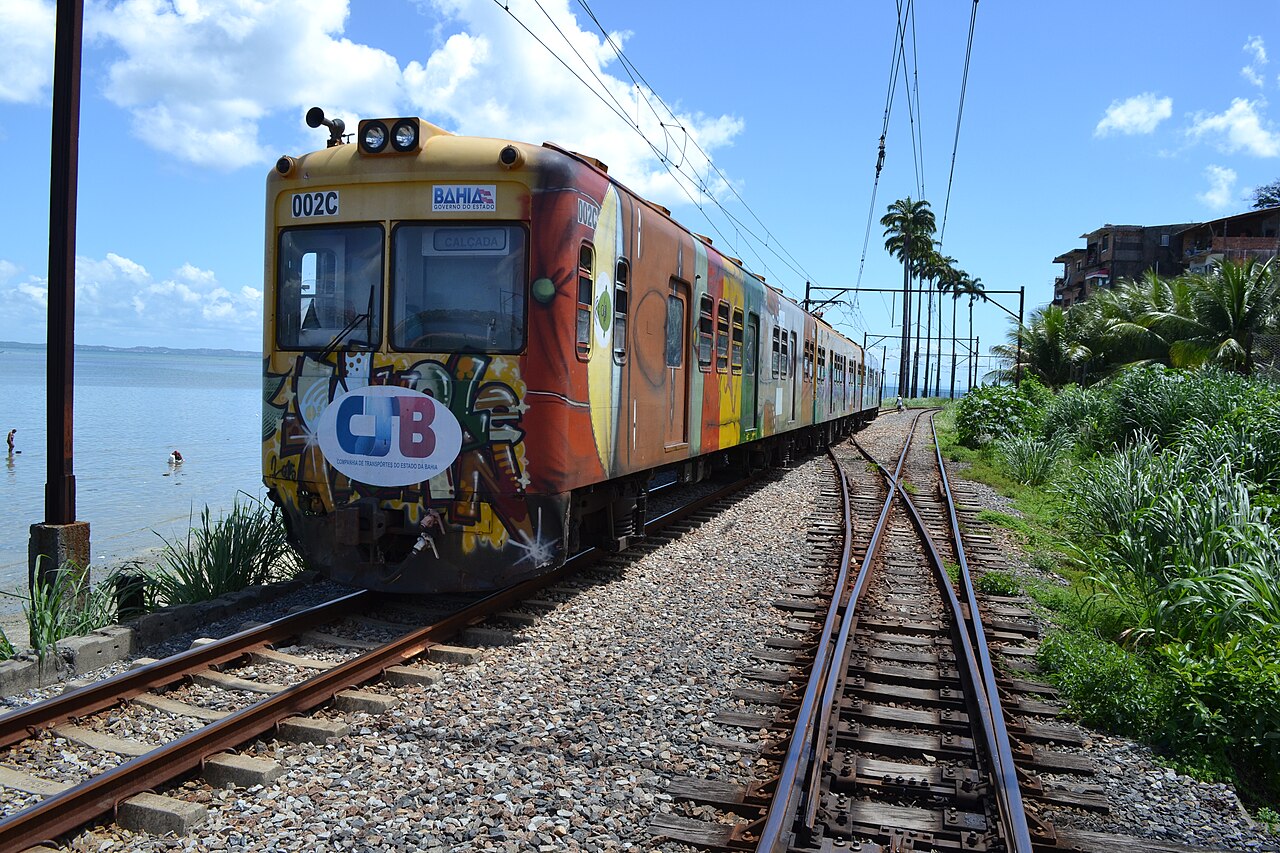
Image: Foto: Wikimedia Commons · License: cc-by-sa
The Metro as a Driver of Urban and Productive Development
The Metro as a Driver of Urban and Productive Development
Main source: LA Metro Officials Highlight Progress, Plans for Transit | Engineering News-Record, Eco-Rapid Transit: Metro Light Rail to Connect Southeast Los Angeles County & DTLA | VerdeXchange, Expansão da Linha 4 do Metrô de São Paulo terá apoio do Banco Mundial | ONU News · By The Rail Post Desk
Modernity is not abstract. It has rails, gauge, energy, and direction, and the metro is one of its clearest expressions.
A continuous flow of people, ideas, and opportunities defines urban modernity, where the metro emerges as a vital infrastructure. According to Engineering News-Record, the expansion of the Los Angeles metro is a lesson for cities around the world, including Brazil.
The tracks not only connect geographical locations but also define the identity and future of metropolises. In California, the Southeast Gateway Line promises to transform urban mobility by crossing 12 cities, marking a leap into the modernity of the 21st century.
The ongoing modernization of LA Metro, as highlighted by VerdeXchange, is not just a logistical improvement but an economic and social turnaround that Brazil should be inspired by.
Brazil, with its growing urban complexity, urgently needs to rethink its transportation modes as tools for development. The metro is not just a means of getting from one place to another; it is the artery that feeds urban life.
For example, São Paulo's metro is receiving a boost for its expansion with the support of the World Bank, as reported by UN News. This investment not only improves connectivity but also promotes significant social impact, benefiting thousands of passengers daily.
The expansion of Line 4 of the São Paulo Metro to Taboão da Serra is a practical example of the potential of the metro in connecting communities and driving sustainable development.
Much more than a simple train station, metro stations are becoming centers of urban life, as pointed out in a study by Demain la Ville. These stations, once considered just points of passage, now embrace a new identity, promoting closer integration with the cultural and economic life of cities.
The architecture of metro stations is increasingly an expression of a city's identity, reflecting its personality and aspirations. They become cultural landmarks and meeting points, promoting social cohesion and equal access to opportunities.
In Brazil, this perspective is essential for the expansion of the metro, which should be seen not only as an investment in infrastructure but as a driver of urban and productive development.
Connecting geographical locations and ensuring the mobility of Brazilians is a priority for the country's sustainable growth. The metro is a central piece in this puzzle, as it promotes the fluidity of commerce, leisure, and daily work, contributing to urban efficiency and competitiveness.
Thus, when considering metro expansion projects in different parts of the world, Brazil must reflect on how its own railway system can be a catalyst for positive changes, driving socio-economic development and improving the quality of life of its inhabitants.
FONTES DE REFERÊNCIA:LA Metro Officials Highlight Progress, Plans for Transit | Engineering News-Record https://www.enr.com/articles/61034-la-metro-officials-highlight-progress-plans-for-transit
Eco-Rapid Transit: Metro Light Rail to Connect Southeast Los Angeles County & DTLA | VerdeXchange https://archive.verdexchange.org/news/eco-rapid-transit-metro-light-rail-connect-southeast-los-angeles-county-dtla
Expansão da Linha 4 do Metrô de São Paulo terá apoio do Banco Mundial | ONU News https://news.un.org/pt/story/2025/08/1850604
Les stations de métro revisitées : vers un nouveau mode de vie ? https://www.demainlaville.com/les-stations-de-metro-revisitees-vers-un-nouveau-mode-de-vie/