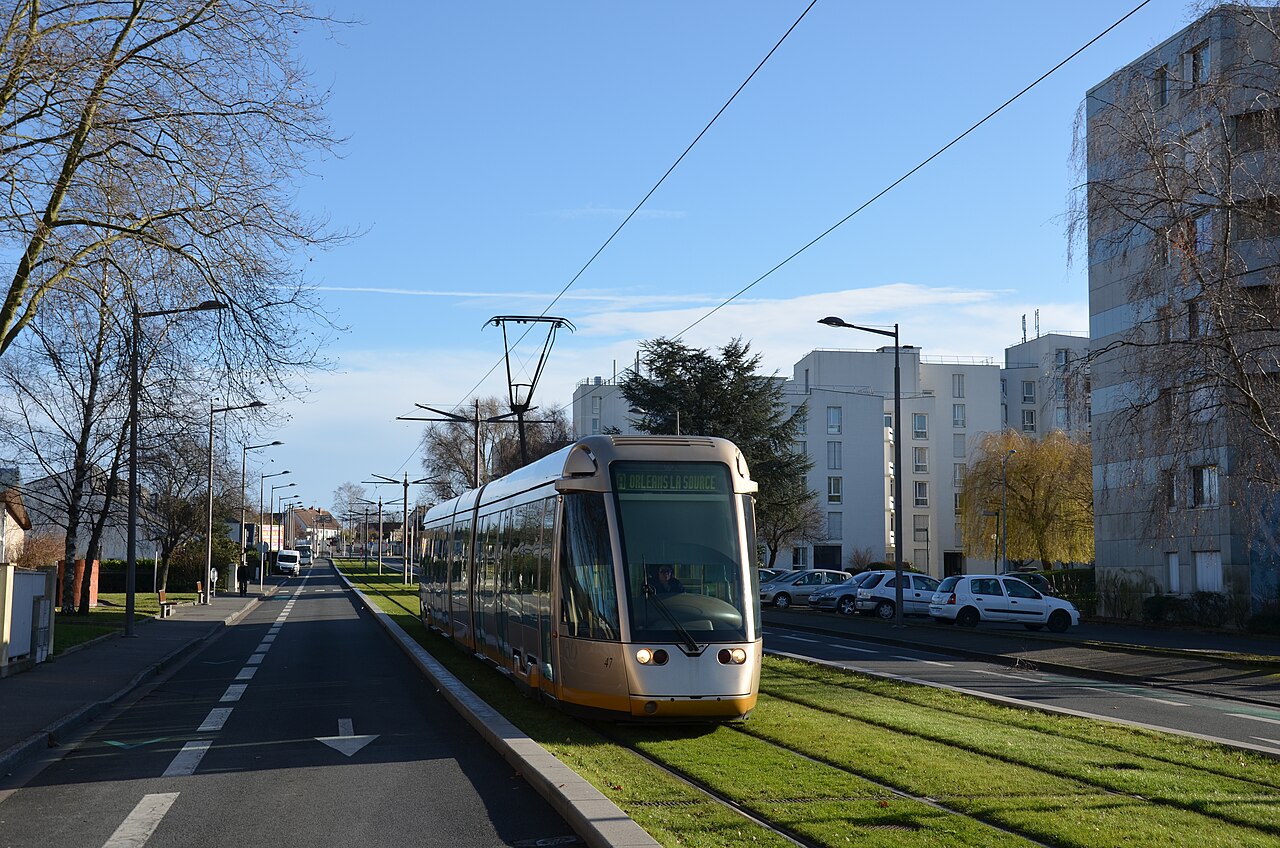
Image: Foto: Wikimedia Commons · License: cc-by-sa
VLT as an urban scalpel and the new design of São Paulo's city center
VLT as an urban scalpel and the new design of downtown São Paulo
Main source: Prefeitura conclui estudo urbanístico e avança com projeto de Veículo Leve sobre Trilhos (VLT) para o centro de São Paulo - São Paulo Urbanismo - Prefeitura, VLT da Baixada Santista - SYSTRA Brasil, St. Louis Metro Transit, partners open new light rail station · By The Rail Post Desk
Rail transport ceases to be merely a means of movement to become the axis of a surgery of requalification of public space, the economy, and life in metropolises.
Every great city reveals its intelligence by the way it moves people. In the heart of São Paulo, the São Paulo Streetcar project emerges as the most sophisticated attempt to use Light Rail Vehicles (VLT) far beyond mobility, aiming at the deep rehabilitation of the urban fabric of the central region.
São Paulo City Hall, through São Paulo Urbanismo, completed in February 2025 a dense urban study that mapped the impacts of the new mode on the dynamics of the central region. The planned system comprises two lines totaling 12 kilometers in length, with capacity to serve up to 134,000 passengers daily, integrating five bus terminals, nine subway stations, and two CPTM stations.
The route crosses Bom Retiro and Brás, stitching together cultural anchors such as Sala São Paulo, the Municipal Theater, and the Mário de Andrade Library. It is not merely a transport line, but an intermodal axis that connects the Radial Leste BRT and the future Celeste subway line, reducing dependence on individual motorized transport and promoting structurally more efficient trips in a region that breathes history and popular commerce.
The urban planning turning point lies precisely in treating the VLT as a scalpel instrument for the requalification of deteriorated spaces. The SP Urbanismo document directly points to the transformation of the Luz region and the Historic Triangle, aiming at increasing real estate occupancy and catalyzing investments anchored in the permanent presence of the rail.
The reasoning is not abstract. International experiences such as those in Seville, Bilbao, and Bordeaux have proven that the implementation of modern streetcars works as a vector for real estate appreciation, energizing local commerce and attracting new residents to formerly degraded central zones. In São Paulo, the expectation is that the São Paulo Streetcar will generate a virtuous circle in which the public sector delivers mobility infrastructure and the private sector responds with new housing and economic developments along the permanent way.
From the operational engineering standpoint, the project aligns with the most modern in clean traction. The vehicle may operate with electric power via overhead catenary or even with hydrogen cells, using regenerative braking systems that return energy to the grid at each stop, a concrete gain in energy efficiency and reduction of carbon emissions and particulate matter in the central area.
The financial feasibility model also signals a path of fiscal rationality. The Executive Secretariat for Privatization and Partnerships is conducting a Request for Expression of Interest (PMI) to structure a Public-Private Partnership (PPP) that covers the implementation, operation, and maintenance of the system, building a contractual architecture that aims to shield the investment from the chronic budgetary instability of the public sector.
While the capital of São Paulo advances with its 21st-century electric streetcar, the Baixada Santista also bets on VLT technology to solve its metropolitan mobility bottleneck. The Barreiros–Porto section, whose basic design was consolidated by SYSTRA Brazil, leveraged the route of the old Samaritá-Porto railway, deactivated, to implement an exclusive lane that connects the insular portion of São Vicente to the port heart of Santos, the largest port complex in South America.
There, the functional guideline of the Metropolitan Integrated System (SIM) determined a complete reorganization of the public transport network, with demand studies, operational simulation, and integration with bike lanes and bike parking, laying the groundwork for a quality leap in a conurbation of 1.8 million inhabitants suffering from road saturation. It is the practical application of the concept that the VLT, unlike BRT, offers a capacity for permanent urban structuring, because the rail is a long-term physical commitment that signals to the real estate market where the city will actually be in the next 50 years.
Modern railway engineering has offered ingenious solutions to reduce the impact of works and the implementation cost. In France, builders have disseminated the technique of the floating concrete slab with low rail, which requires only 42 centimeters of excavation, minimizing the diversion of underground utility networks and drastically reducing disruptions for residents and shopkeepers during the construction phase.
Another French refinement is the fixing of poteaux catenaires — the support poles for the overhead network — directly to the track structure, a technique that eliminates the need for heavy and numerous independent concrete blocks, generating significant savings in material and execution time without sacrificing the system’s electrical functionality. This rationality extends to the energy substations, which are now designed as compact, prefabricated shelters, technical containers that deliver the same power with a fraction of the construction footprint of traditional substations.
The maintenance center, the logistical heart of any VLT system, has also undergone a scale reengineering. The modern compact model concentrates approximately 20,000 square meters all that is essential: access and storage tracks, washing station, sanding station, and a maintenance building with specialized tracks — including roof access for vehicles, inspection pit, and lifting system — proving that full operational functionality can be achieved without consuming precious urban areas with oversized depots.
In the United States, station financing also found a creative cooperation model. The Cortex station, opened in St. Louis, was the first new stop on the MetroLink system in over a decade, made possible by a federal TIGER grant of $10.3 million combined with over $5 million from private partners such as Washington University and BJC HealthCare, demonstrating that anchoring in anchor institutions is a replicable strategy to unlock resources where public funds alone are insufficient.
What unifies São Paulo, Baixada Santista, St. Louis, and the 29 French agglomerations that operate modern streetcars is the understanding that the VLT is a piece of total urban engineering, not just a vehicle on rails. Each kilometer of permanent way implemented changes the land occupation profile, reduces heat islands with the planned removal of asphalt, and redirects pedestrian flow toward a more human, civilized, and economically vibrant scale of the city.
The São Paulo Streetcar design will also have public hearings and consultations to calibrate the alignment and stations to the real demand of the population, a listening process that, if well conducted, can turn the project into an example of participatory governance in mobility. Brazil, which destroyed a large part of its streetcar networks in the 20th century, now returns to the urban rail with the technical disposition and contractual framework to do so as a development tool, and not as a museum piece.