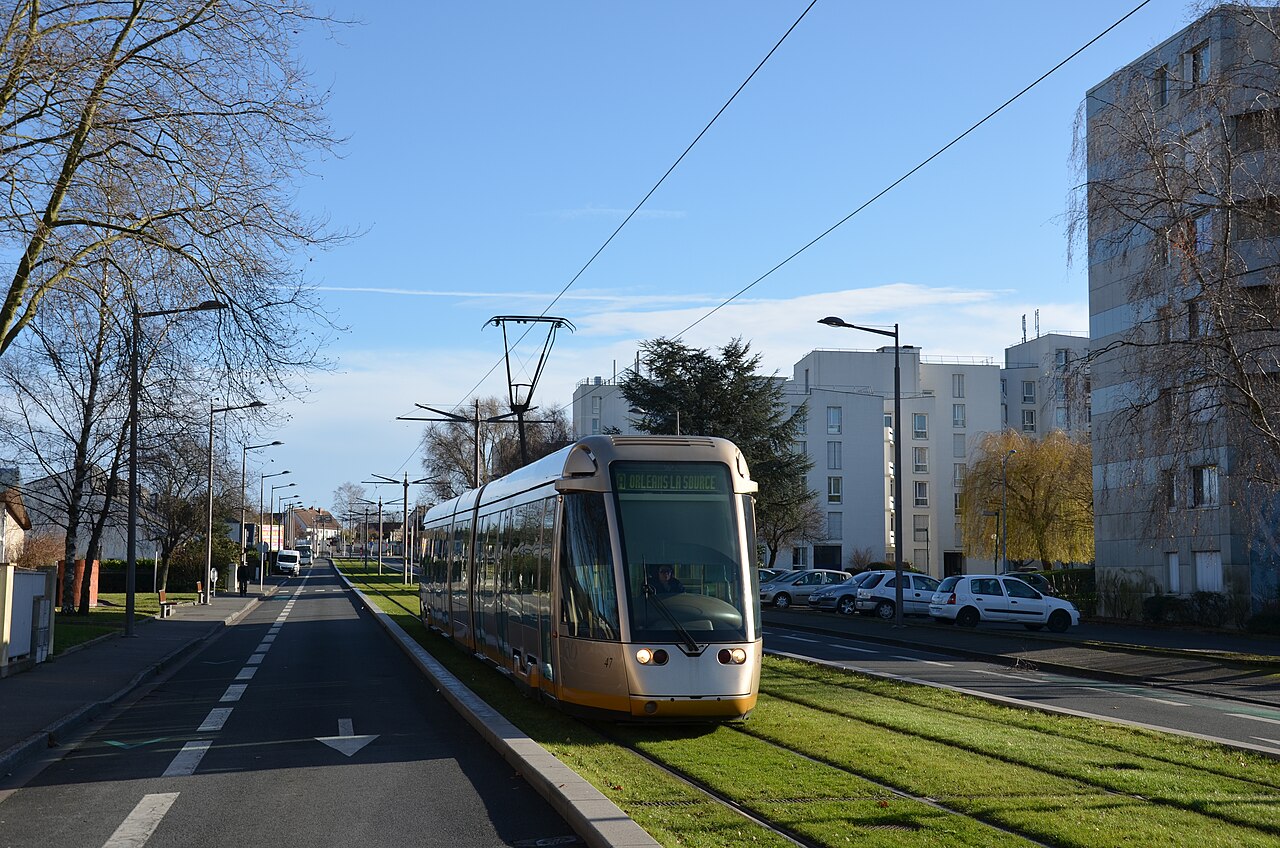
Image: Foto: Wikimedia Commons · License: cc-by-sa
Salvador's VLT inaugurates a new era of rail mobility in Brazil
Salvador's VLT inaugurates a new era of rail mobility in Brazil
Main source: Conheça 9 projetos de VLT no Brasil -, Notícias - Mobilize Brasil, Brasil tenta, de novo, expandir as ferrovias. Mas ainda falta combinar com os chineses · By The Rail Post Desk
The inauguration of Calçada Station is not just a local milestone, but the harbinger of a national transformation in how the country views light rail vehicles.
Rails are the material geometry of the future. Saying so is not an exercise in railway nostalgia, but a technical realization that dense, economically vibrant cities need medium-capacity transport systems that occupy urban space intelligently, not with highway-oriented brutality.
It was with this logic that Salvador inaugurated, on April 17, 2025, Calçada Station, the first functional stop of its new Light Rail Vehicle (VLT). The initial 4-kilometer stretch between Calçada and Lobato is already operating in the testing phase with zero fare, a bold gesture in a nation accustomed to treating mobility as a commodity.
The new Salvador line is an urban requalification project on rails, combining low-floor technology — which ensures universal accessibility and level boarding — with a semi-segregated system that allows the train to coexist with the city fabric without the disruptions of buses. The choice of overhead catenary as the power source, discarding diesel combustion that still tarnishes systems such as that of Baixada Santista, signals a commitment to transport decarbonization.
Although some offices still dabble in speculation with the ART (Pneumatic Light Vehicle), a hybrid with tires that attempts to mimic the stability of rails, Salvador bet on steel on steel. The choice is laden with technical symbolism, because while tires wear down from asphalt friction, steel wheels return energy to the grid during braking and offer more than three decades of service life at lower operational cost.
What is happening in the Bahian capital is not an isolated event, but the catalyst of a wave of projects that, as pointed out by the specialized portal Via Trolebus, reaches at least nine Brazilian cities in different stages of development. The movement reaffirms that the country is, albeit belatedly, rehabilitating light rail vehicles as a central technology for development, abandoning the prejudice of the last century that condemned the tram to disappearance.
The breadth of projects impresses by scale and geography. Niterói, for example, had an investment of R$ 450 million approved to implement a 5-kilometer VLT with 10 stations, connecting the Barreto neighborhood to the João Goulart Terminal in the city center, in a partnership between the municipality and the federal government.
Even more ambitious, the Campinas project foresees 44 kilometers of line and 18 stations, stitching three municipalities together and linking the metropolitan center to Viracopos Airport, which will transform the region’s urban logistics. In Sorocaba, the proposal is to leverage the existing railway network to implement 25 kilometers of VLT with 13 stations, a smart infrastructure asset reuse strategy that reduces implementation costs.
However, the materialization of these projects bumps into the relentless math of financing. The financial engineering of VLTs requires BNDES and other state agencies to offer long repayment terms, which can reach 60 years, in addition to a robust grace period during the construction phase when the system does not yet generate revenue.
The fact that the Brazilian railway network has historically focused on heavy freight trains, which carried 406.6 million tonnes of iron ore in 2025 alone, created a gap in industrial and operational knowledge regarding surface passenger systems. Recovering this capability will require not only public money, but the formation of supplier chains that master everything from intelligent traffic signaling to the manufacturing of modern railway trucks.
The presence of international capital and technology, such as that glimpsed with possible Chinese partnerships in larger-scale projects, will be a determining factor for the success of this new generation of VLTs, although pragmatism recommends that the country not completely outsource design intelligence. Salvador demonstrated, with its first station in operation, that there is local competence to manage the complexity of implementation.
The significance of this new rail era goes beyond the mere statistic of passengers transported, because every kilometer of semi-segregated VLT reorganizes urban land in favor of the pedestrian and the citizen, subtracting space from the private car. When a low-floor train glides silently along Calçada towards Lobato, what is heard is not the creaking of the past, but the muffled sound of cities beginning to reconcile with their own geography.