Image: Foto: Wikimedia Commons · License: cc-by-sa
The largest budget in the history of the São Paulo Metro: R$ 5.4 billion to expand three lines in 2026
The largest budget in the history of the São Paulo Metro: R$ 5.4 billion to expand three lines in 2026
Main source: Brasil e China firmam parceria que prevê ferrovia ligando Atlântico e Pacífico | G1, Brasil tenta, de novo, expandir as ferrovias. Mas ainda falta combinar com os chineses, SP anuncia mais de R$ 50 bi para expansão do Metrô - Times Brasil | CNBC · By The Rail Post Desk
The largest investment in the company’s history signals a race for modernization and capacity, even though the country remains far from high-speed rails.
Modernity is not abstract. It has ballast, gauge, energy and direction.
The record budget of R$ 5.4 billion approved for the São Paulo Metro in 2026 materializes this maxim with numbers and steel, representing a 12% jump from the R$ 4.8 billion of the previous year. It is, above all, a technical bet focused on the backbone of São Paulo’s mobility, with a focus on intelligent control systems, fleet expansion, and physical extension of the network into areas historically lacking rails.
As Exame magazine detailed when analyzing the budget document, the largest amount of funds, R$ 2.59 billion, will be allocated to the expansion of Line 2-Green. The project foresees laying 13.8 kilometers of new tracks from Vila Prudente, crossing the east zone and overcoming the Tietê River to finally connect the capital to the city of Guarulhos, a feat pursued for decades.
The operational transformation, however, will be silent and cybernetic before becoming visible on the map. The adoption of the CBTC (Communication-Based Train Control) system is the real brain of this modernization, replacing the old logic of fixed signaling blocks with continuous radio communication between trains and the control center. This allows trains to run with centimeter precision, drastically reducing the minimum headway between them and, in practice, squeezing more trains onto the same line without digging a new tunnel.
The technological package is completed with the installation of platform screen doors, glass structures that temporarily isolate the passenger from the track until the train arrives. The engineering behind them goes far beyond safety against falls: the doors synchronized with the exact train stop — something guaranteed by the motorized bogies with pneumatic suspension of the new cars — eliminate the slow and costly ventilation generated by air displacement in tunnels, optimizing the climate control of underground stations.
A substantial part of the plan rests on elevated concrete guideways. Line 15-Silver, a monorail in the east zone that already carries crowds between Vila Prudente and São Mateus, will receive R$ 1.03 billion for its extension towards Ipiranga and Cidade Tiradentes, as well as 19 new trains, of which 15 have already arrived at the system’s yard. A state-of-the-art monorail is not a futuristic toy standing still in the landscape, but a fast-deployment engineering solution that glides over a rectangular concrete beam with lateral stabilizing tires, negotiating tight curve radii that a wide-gauge (1,600 mm) metro train could never manage without massive expropriations.
The coexistence of the old and the new shows in the fleet numbers. Lines 1-Blue, 2-Green, and 3-Red, the backbones of the system since the 1970s, will receive 44 new trains with stainless steel car bodies, powered by alternating-current pantographs that collect energy with fewer sparks and less wear on the overhead catenary. Meanwhile, Line 17-Gold, a monorail with a winding route that is expected to finally connect Congonhas Airport to Morumbi Station in March 2026, will consume R$ 836.3 million to close a saga of works started over a decade ago.
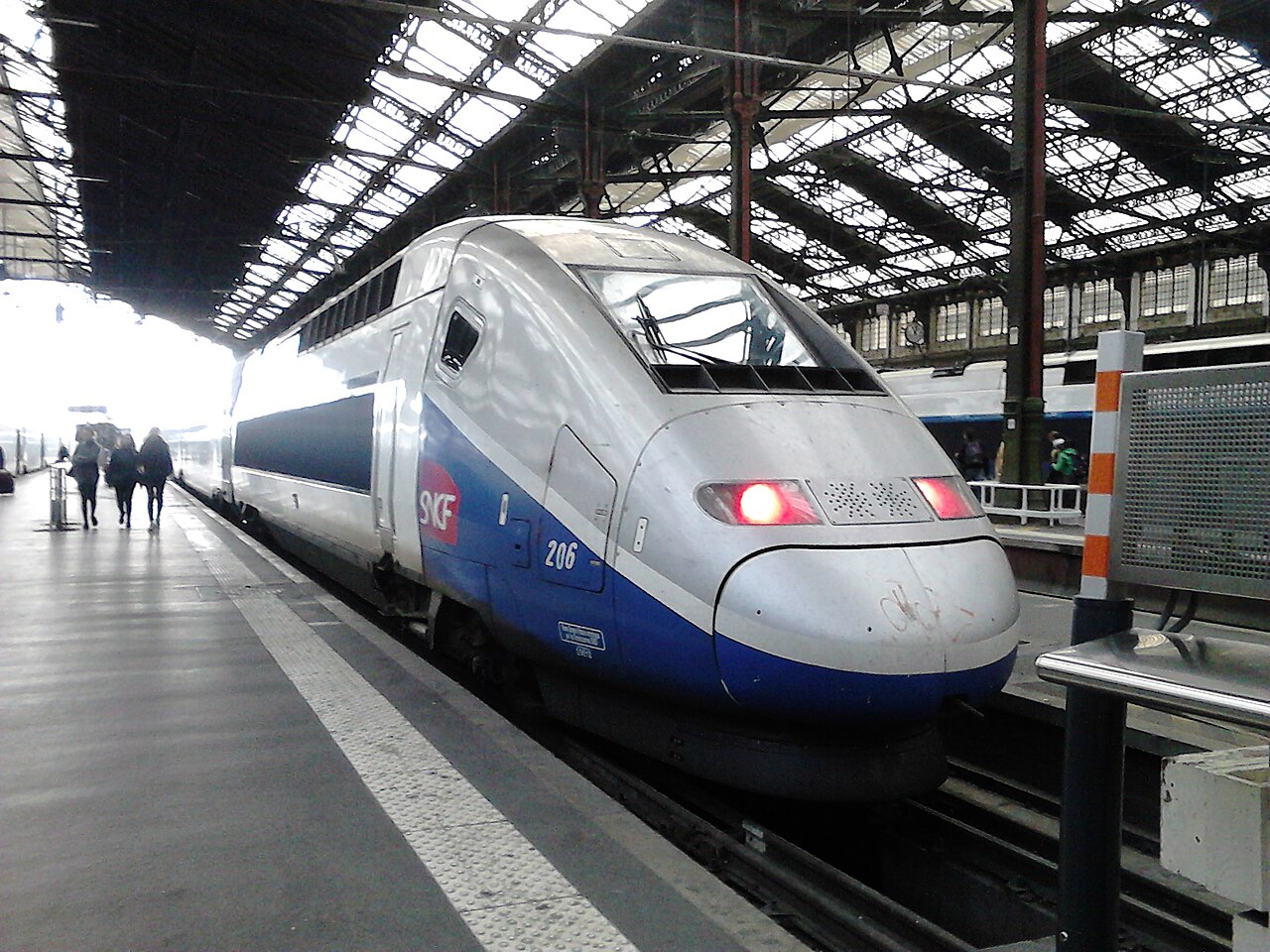
The scale of the São Paulo investment, R$ 5.4 billion in a single year, highlights a technical and strategic contradiction in Brazil’s transport matrix. While the country’s largest metropolis plunges forcefully into modernizing urban mass transit, buying onboard digital control systems and high-capacity fleets, the concept of high speed — the ability to connect cities at 300 km/h on rails — remains a sketch in ministerial drawers. The contrast is not only about money but about logistical philosophy: priority is given to solving door-to-door collapse within the urban network, but the rapid stitching together of the national territory with welded steel rails is indefinitely postponed.
It is not for lack of alignment or economic interest that Brazil lacks a high-speed train between São Paulo and Campinas, or, more ambitiously, between Rio de Janeiro and São Paulo. The problem is the scale of financing and the political decision to integrate the network, something that has dragged on since the abandonment of the TAV project. While the government flirts with partnerships to make the Ferrogrão and other commodity corridors viable, the signal that the country can have a robust railway industry actually comes from the purchase of trainsets for urban transport and the structuring of local supply chains, such as the arrival of the Chinese manufacturer CRRC in Araraquara to produce trains for the Intercity Train.
With its record budget, the São Paulo Metro is buying more than trains and electronic brain boards for traffic control. It is acquiring the technical muscle that one day could form the basis for a truly fast regional mobility network, where alternating current flows through pantographs not only in the tunnel under Paulista Avenue but also in the roadbed of an express passenger line between metropolitan regions. Until then, urban modernity on rails will continue to gain ballast, while the horizon of the high-speed train remains a promise waiting for energy and direction.